How We Built Writer-Skills: A Writing Workflow Powered by AI Agent Skills
Mar 18, 2026
The Problem with AI Writing
Here’s how most people use AI to write articles: give it a topic, let it produce a first draft, then edit it yourself. This workflow can cut drafting time by 50-70%, which sounds great.
The problem is that the output reads like canned content. Grammatically correct, well-structured, yet like something anyone could have written. No perspective, no personal experience, no reason for the reader to keep going. Readers generally prefer articles with personal stories, and AI’s default output is the opposite of that.
My own experience confirmed this. AI agents write poorly without guidance. Most people focus on making AI “write better,” but I think the real issue goes beyond writing technique. Pre-writing preparation is just as big a factor, and this became the guiding idea behind how I designed Writer-Skills.
The first draft of this article was produced with Writer-Skills, a set of skills for collaborating with AI agents that covers the entire writing workflow, from choosing a topic and gathering material to writing, editorial review, and translation.
Writer-Skills is open source — you can find the full code on GitHub.
Lessons from the Previous Version
Writer-Skills wasn’t my first attempt at using AI agents for writing. I’d previously built a skill for non-fiction writing and hit quite a few walls.
The biggest lesson: you have to prepare enough material for the AI upfront. Who is the reader? What will they gain from reading this? After writing, did you re-read it from the reader’s perspective to confirm it delivers what they need? If these questions aren’t answered before writing starts, no amount of revision will save it.
Another difficulty was AI’s grasp of writing technique. Without proper prompts, AI writing is boringly straightforward. It can get facts right but struggles to deliver anything compelling. What words evoke what feelings has no simple rule you can hand to an AI. Writing is too complex to get right in one shot.
I eventually found an effective approach from Claude’s Prompting Best Practices: provide lots of examples. Every time I revised AI output, I recorded why the change was needed, what I changed it to, and the reasoning. Good examples and bad examples side by side, letting AI understand the difference. These revision records became teaching material themselves, converting the tacit knowledge from human editing into rules AI can learn from.
These positive and negative examples are the kind of teaching material AI agents absorb well. They can’t match the spark of a human’s best ideas, but after accumulating enough examples, you can get AI writing to a usable level.
Design Philosophy: Using AI to Extract Perspectives
Beyond the examples, I also found that writing from scratch rarely works well. A better approach is to extract experiential material from the author through conversation: the interesting things they learned about a specific topic, the discoveries that surprised them, and other first-hand experiences. Use these as raw ingredients and let AI cook them into a dish. That works far better than conjuring something from nothing.
You need to find the article’s “soul.” It might be the frustration of spending half a day debugging only to circle back to a simple fix, or the satisfaction of changing a single line and watching the program run smoothly. Once you find these rich ingredients, hand them to a skilled chef to cook.
Writing is inherently a high-friction task. Colleagues have plenty of interesting things to share from their work, but people without a writing habit always struggle to take the first step when facing a blank text editor.
So Writer-Skills replaced the blank editor with conversation. When an interesting article idea surfaces, the AI agent guides you through a sustained dialogue to uncover the interesting parts, the difficulties, and the conclusions. “What decisions did you make? Why did you choose this direction? What was unexpected?” After a round of conversation, your perspectives and concrete experiences are extracted into an outline backed by real material.
Over time, users may learn to run this extraction process themselves, without needing AI’s guidance.
Architecture of Three Skills
Writer-Skills consists of three skills: Management, Preparation, and Writing. This split came from two different design perspectives: “idea generation and alignment” and “material refinement and writing.”
The writing-management skill was designed from the team’s point of view. From the start, it was built for use by company colleagues together. It handles idea collection and team-level direction: what topics should we write about? Who are our readers? What image do we want to project? These are team-level decisions that, once made, let every author work within the same framework. It also works for individuals. You can set a baseline tone for your own writing, and each subsequent session will remind you to stay roughly aligned with that direction.
The preparation and writing skills were distilled from individual writing practice. Through a question-and-answer process, they gradually guide the author to explore what’s interesting about a “journey,” the surprises along the way, and the final conclusions, while also defining what the reader should “take away” from the very beginning. From there, each section is further refined through editorial review.
The actual workflow looks like this: a colleague casually mentions an interesting technical discovery on Slack, and the Management skill captures the idea in ideas.md. When they’re ready, the Preparation skill interviews them: “What decisions did you make? Why? What was unexpected?” After the conversation, an outline with concrete material emerges. The Writing skill takes that outline and produces a first draft, which then goes through editorial review and author confirmation.
Subagent Architecture: Researcher, Writer, Editor
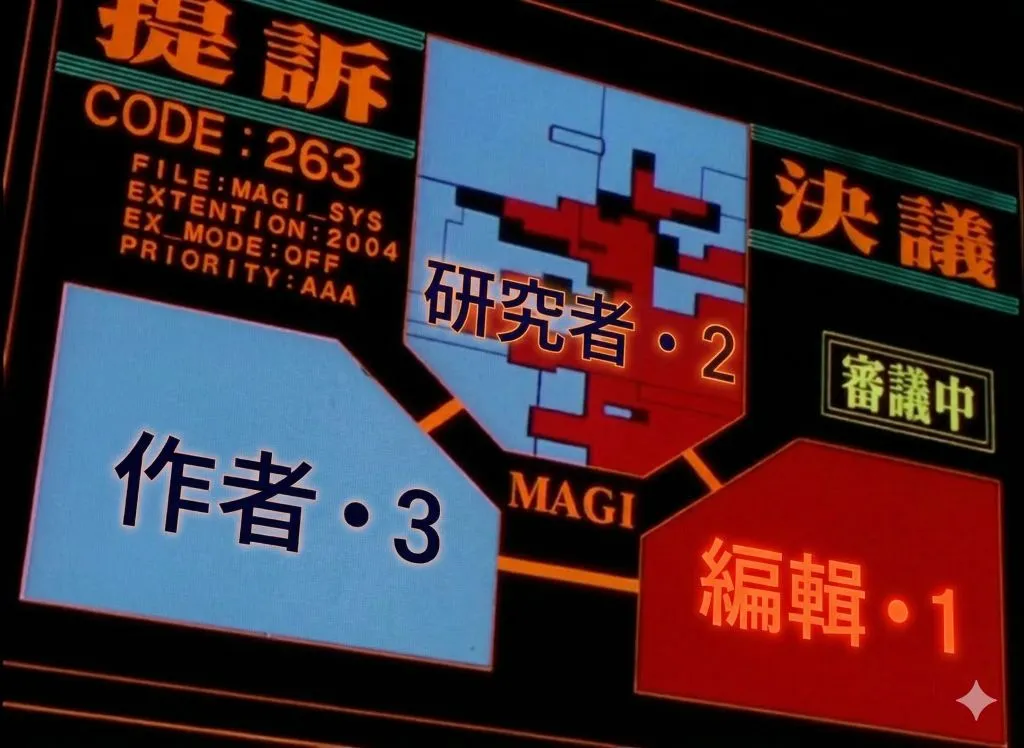
The architectural design of Writer-Skills came from an external inspiration: Superpowers’ Brainstorming skill.
The Brainstorming skill has a subagent review mechanism. After completing a design, it launches an independent subagent with a pre-designed prompt to review the design document. This subagent has a different context from the main agent, so it can examine the output from a fresh angle, uninfluenced by prior conversation history.
This mechanism inspired Writer-Skills’ architecture. When writing an article, we need different roles: a researcher to gather external data, a writer to turn material into prose, and an editor to review quality. Each role brings a different angle.
In Writer-Skills, these roles are implemented as independent subagents. Each subagent has its own context, not “contaminated” by previous conversation history. The benefit of this separation is that each role carries its own purpose: the author wants to ship the article, the editor looks for what can be improved, and the researcher looks for data with different perspectives worth referencing. Their positions differ, but they all make the article better. Agent Skills’ progressive disclosure mechanism fits well here: each role loads only the knowledge it needs, keeping the context window lean.
For this article, the researcher subagent spent a few minutes searching for data on the current state of AI writing and the Agent Skills ecosystem. After the first draft, the editor subagent caught several repeated paragraphs and sentence patterns that violated writing rules, issues the main agent easily overlooks during long conversations.
For Those Who Want to Try
If you want to try AI agent-assisted writing, you can download sadcoderlabs/writer-skills right now. If you use Claude Code or another tool that supports Agent Skills, you can install it directly:
npx skills add sadcoderlabs/writer-skillsIt’s just a few markdown files, so you can also copy them manually.
We’ve already done a lot of back-and-forth tuning on the writing rules, so you shouldn’t need to start from scratch. But everyone’s writing style is different. After reading your first output, you’ll probably want to tweak a few things. I’d suggest recording the reason behind each revision, then updating the skill’s writing rules accordingly. Over time, the writing style will gradually become what you like.
This article itself was written using Writer-Skills. From collecting ideas, preparing material, interviewing to extract perspectives, to the final writing, the entire workflow ran end to end. If you’ve read this far and thought some sections were decent, that’s self-evident proof that the skill writes reasonably well, and the time I spent tuning it wasn’t wasted.
We’ll continue improving this skill as our writing journey progresses. Come join us in AI agent-assisted writing.